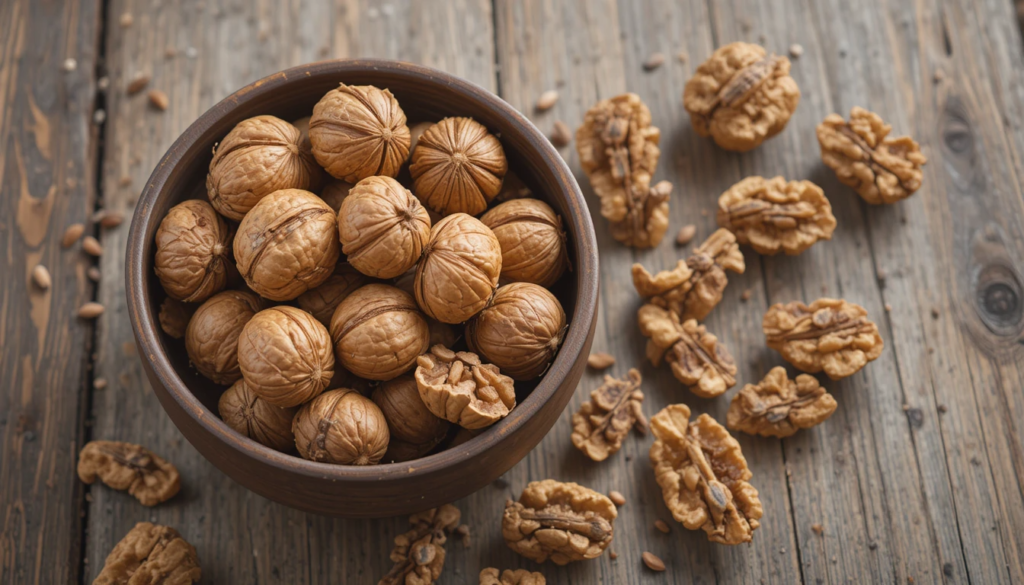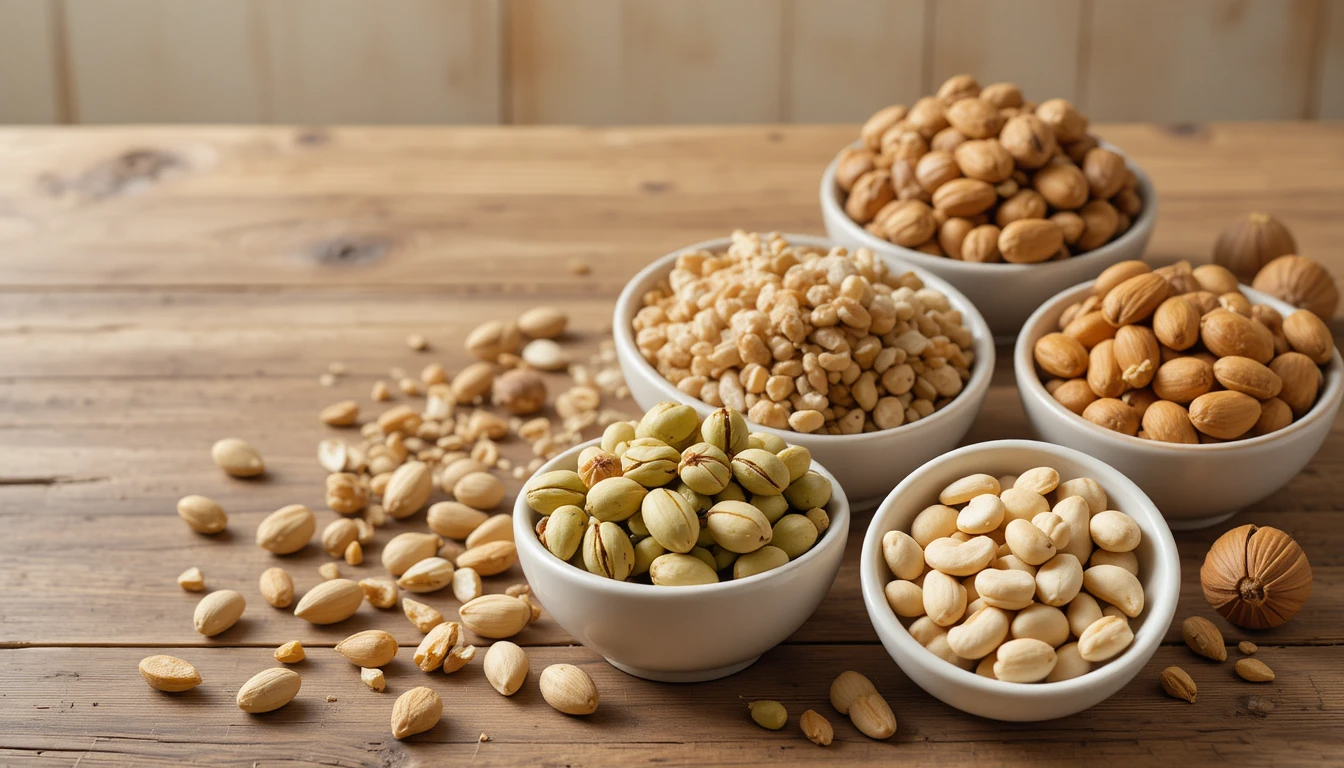
Peanuts top the nut rankings at 6.9 grams of protein per ounce, with almonds and pistachios close behind at about 6 grams each. Open the list to seeds and hemp seeds beat every nut on the shelf at 9 grams per ounce. That ranking on its own is misleading, though, and it is the reason so many people add a handful of almonds to their day and wonder why their protein total barely moves. An ounce of almonds carries 6 grams of protein and 164 calories, and most of those calories are fat. The same 164 calories of skinless chicken breast delivers roughly 31 grams. Nuts are a fat food that happens to contain protein, not a protein food.
This guide gives you the complete USDA-based ranking, a protein-per-calorie column most nutrition articles leave out, and a realistic account of what nuts can and cannot do for your daily protein target.
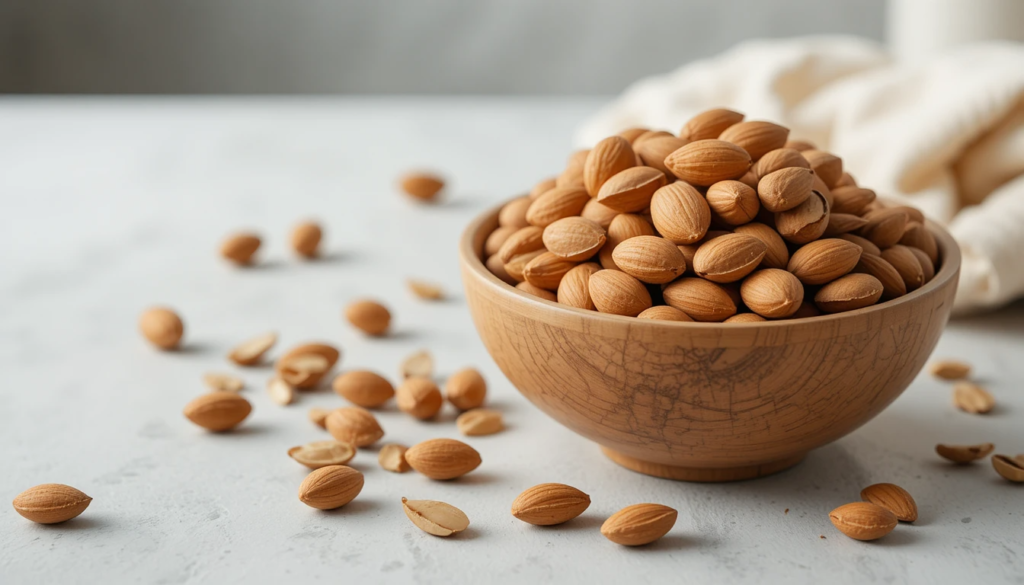
Nuts and Seeds Ranked by Protein: The Full Table
Figures below are drawn from the USDA FoodData Central database and the International Nut and Dried Fruit Council’s USDA nutrient chart for tree nuts. A standard serving is 1 ounce (28 grams).
| # | Nut or seed | Protein per oz | Protein per 100 g | Calories per oz | Protein per 100 cal |
|---|---|---|---|---|---|
| 1 | Hemp seeds | 9 g | 31.6 g | 160 | 5.6 |
| 2 | Pumpkin seeds | 8.5 g | 29.8 g | 165 | 5.2 |
| 3 | Peanuts (dry roasted) | 6.9 g | 24.4 g | 165 | 4.2 |
| 4 | Almonds | 6 g | 21.2 g | 164 | 3.7 |
| 5 | Pistachios (dry roasted) | 6 g | 21.1 g | 159 | 3.8 |
| 6 | Sunflower seeds | 5.5 g | 19.3 g | 165 | 3.3 |
| 7 | Flax seeds | 5.2 g | 18.3 g | 150 | 3.5 |
| 8 | Sesame seeds | 4.8 g | 17 g | 160 | 3.0 |
| 9 | Chia seeds | 4.7 g | 16.5 g | 150 | 3.1 |
| 10 | Cashews (dry roasted) | 4.3 g | 15.3 g | 157 | 2.7 |
| 11 | Walnuts | 4.3 g | 15.2 g | 185 | 2.3 |
| 12 | Hazelnuts | 4.3 g | 15 g | 178 | 2.4 |
| 13 | Pine nuts | 3.9 g | 13.7 g | 191 | 2.0 |
| 14 | Pecans | 2.6 g | 9.2 g | 196 | 1.3 |
| 15 | Macadamia nuts | 2.2 g | 7.9 g | 204 | 1.1 |
| 16 | Dried coconut | 2 g | 6.9 g | 185 | 1.1 |
The final column is the one worth studying. It shows how much protein you actually receive for each 100 calories you spend, and it reorders the list entirely: pecans and macadamias deliver barely a gram of protein per 100 calories, while hemp and pumpkin seeds deliver five times that.
One classification note: peanuts are botanically a legume, not a tree nut. They are grown underground and are more closely related to lentils and peas than to almonds. They are included here because virtually everyone shops for and eats them as a nut, and because they genuinely are the highest-protein option in the nut aisle.
The Protein-Per-Calorie Problem Most Guides Skip
Almost every article on this topic stops at “almonds have 6 grams of protein.” That number is accurate and, on its own, close to useless, because it says nothing about what those 6 grams cost you.
| Food | Protein per 100 calories |
|---|---|
| Skinless chicken breast | ~18.8 g |
| Non-fat Greek yogurt | ~17 g |
| Eggs | ~8.3 g |
| Lentils, cooked | ~7.8 g |
| Hemp seeds | 5.6 g |
| Peanuts | 4.2 g |
| Almonds | 3.7 g |
| Walnuts | 2.3 g |
| Macadamia nuts | 1.1 g |
Put plainly: to get the protein in one chicken breast from almonds alone, you would eat roughly five ounces of almonds and take on about 820 calories in the process. That is not an argument against nuts. It is an argument against treating them as a protein strategy.
What nuts genuinely offer is fibre, vitamin E, magnesium, and unsaturated fat in a shelf-stable form that needs no preparation. The protein is a useful bonus on top of that, and it is best counted as a bonus.
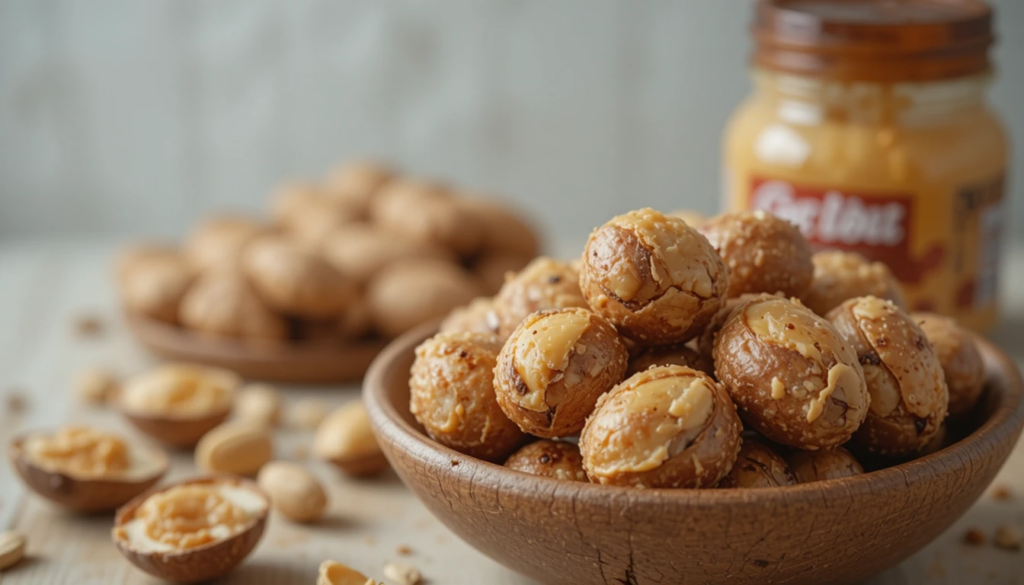
The Top Five Nuts, With Real Portion Sizes
Peanuts — 6.9 g per ounce (about 42 peanuts)
The highest-protein and by a wide margin the cheapest option, typically a fraction of the price per gram of protein of any tree nut. Dry-roasted and unsalted keeps the sodium down. Natural peanut butter, with peanuts and salt as the only ingredients, carries roughly 7 to 8 grams of protein per two-tablespoon serving.
Almonds — 6 g per ounce (about 23 almonds)
The best-known choice, and the one with the strongest vitamin E content of any nut. Twenty-three almonds is a smaller pile than most people picture, which is exactly how a “handful” quietly becomes three servings and 500 calories.
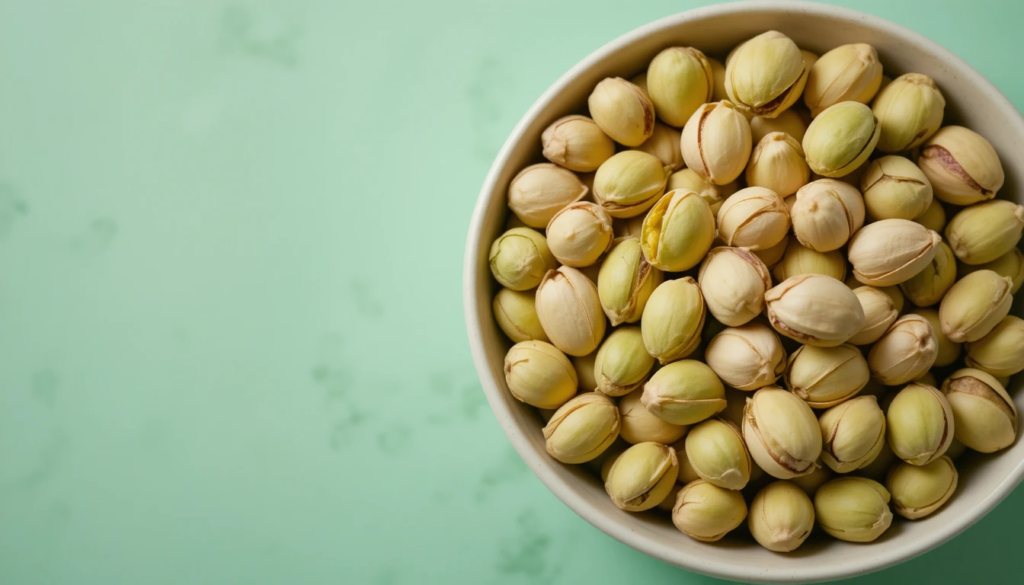
Pistachios — 6 g per ounce (about 49 kernels)
Matching almonds on protein while giving you roughly twice as many pieces per serving, pistachios are the most satisfying option if volume matters to you. Buying them in the shell slows eating down further, which is a genuinely effective portion-control trick rather than a marketing line.
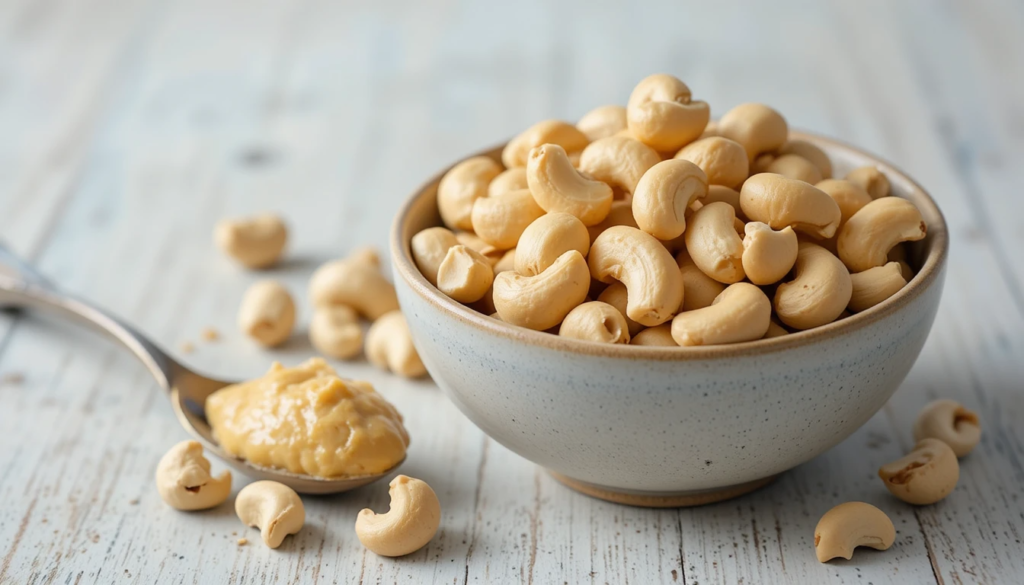
Cashews — 4.3 g per ounce (about 18 cashews)
Lower in protein than the three above and noticeably higher in carbohydrate, which is part of why cashews work so well in creamy sauces and dairy-free milks. A reasonable choice for texture, a mediocre one for protein.
Walnuts — 4.3 g per ounce (about 14 halves)
Walnuts earn their place on omega-3 content rather than protein. They are the richest common nut source of alpha-linolenic acid, the plant-form omega-3, at roughly 2.5 grams per ounce. At 185 calories per ounce they are also among the more calorie-dense options.
Seeds Quietly Beat Every Nut
If maximising protein is the actual goal, the nut aisle is the wrong aisle. Hemp seeds deliver 9 grams per ounce and, unusually for a plant food, supply all nine essential amino acids. Pumpkin seeds follow at 8.5 grams with a substantial magnesium and zinc contribution. Both cost less than most tree nuts and both stir into yoghurt, oats or salads without changing a recipe.
For a fuller comparison across seeds, MyFoodData’s ranking of high-protein nuts and seeds covers the same USDA figures in more depth. If you build breakfasts around oats, our guide to whether you can eat oats raw pairs naturally with these seeds.
How Much Protein Do You Actually Need?
The Recommended Dietary Allowance is 0.8 grams of protein per kilogram of body weight, or 0.36 grams per pound. Harvard Health works the example of a sedentary 140-pound adult, who needs roughly 53 grams a day. The RDA is a floor designed to prevent deficiency, not a target for someone training hard; people building muscle commonly aim well above it.
Run 53 grams through the nut table and the limitation becomes obvious. Meeting that figure with almonds alone means eating about nine ounces, or roughly 1,480 calories, which for most people is most of a day’s energy budget spent on one food. Meeting it with peanuts takes about 7.7 ounces and 1,270 calories. Nuts contribute to a protein total; they cannot carry it.
If your protein interest is driven by strength training, the intake question sits alongside the training question — our guides to arm workouts with dumbbells and the best forearm exercises cover the other half of that equation.
Using Nuts Well Without Overshooting Calories
- Weigh the first few servings. One ounce is 23 almonds or 18 cashews. Almost nobody eyeballs this accurately, and the error is consistently in the same direction.
- Treat nuts as the addition, not the base. An ounce of pumpkin seeds on top of Greek yoghurt turns a 17-gram breakfast into a 25-gram one. An ounce of pumpkin seeds on its own is a snack.
- Choose by protein per 100 calories, not per ounce, when calories matter. That single reordering moves peanuts, hemp and pumpkin seeds up and pecans and macadamias down.
- Buy unsalted where you can. Salted roasted nuts can carry well over 100 mg of sodium per ounce, and the salt is a large part of why a single serving is hard to stop at.
- Skip the honey-roasted and yoghurt-coated versions if protein is the point; the coating adds sugar and calories without adding protein. If you are watching added sugar generally, our piece on how much honey a day is reasonable covers the same ground.
Choosing and Storing Nuts
The high unsaturated fat content that makes nuts valuable also makes them go rancid. Walnuts and pine nuts turn fastest; a sharp, paint-like smell means they are past it, and rancid nuts should be discarded rather than eaten. Sealed containers in the refrigerator extend shelf life to several months, and the freezer to a year or more.
Raw versus roasted makes little practical difference to protein content. Dry roasting removes moisture, which slightly concentrates protein by weight, but the effect is small. Oil-roasted nuts add fat and calories. Where roasting matters most is palatability and, unfortunately, how easy it becomes to eat four servings.
The Short Answer
Peanuts are the highest-protein nut at 6.9 grams per ounce, almonds and pistachios lead the tree nuts at about 6 grams, and hemp and pumpkin seeds outperform all of them at 9 and 8.5 grams. But no nut is an efficient protein source by calorie, and the most useful thing you can do with this table is stop asking nuts to be one. Use them for fat quality, fibre and micronutrients, count the protein as a bonus, and build your actual protein intake around denser sources.
Quick Answers on Nuts and Protein
Peanuts, at 6.9 grams per ounce. Among true tree nuts, almonds and pistachios lead at roughly 6 grams per ounce. Peanuts are botanically a legume, though they are sold and eaten as a nut.
They are a moderate source, not a strong one. Almonds provide about 3.7 grams of protein per 100 calories compared with roughly 18.8 grams for skinless chicken breast. Nuts are better understood as a source of unsaturated fat, fibre and micronutrients, with protein as a secondary benefit.
Around 77 almonds, or about 3.3 ounces, which also carries roughly 545 calories. This is why nuts work better as a protein supplement than a protein staple.
Yes. Hemp seeds provide 9 grams per ounce and pumpkin seeds 8.5 grams, both above the highest-protein nut. Hemp seeds also supply all nine essential amino acids, which is uncommon in plant foods.
Not meaningfully. Dry roasting removes water and can slightly raise protein per gram by weight. Oil roasting adds fat and calories without adding protein.
Among common nuts, macadamias at 2.2 grams per ounce and pecans at 2.6 grams. Both are also the most calorie-dense, at over 195 calories per ounce.