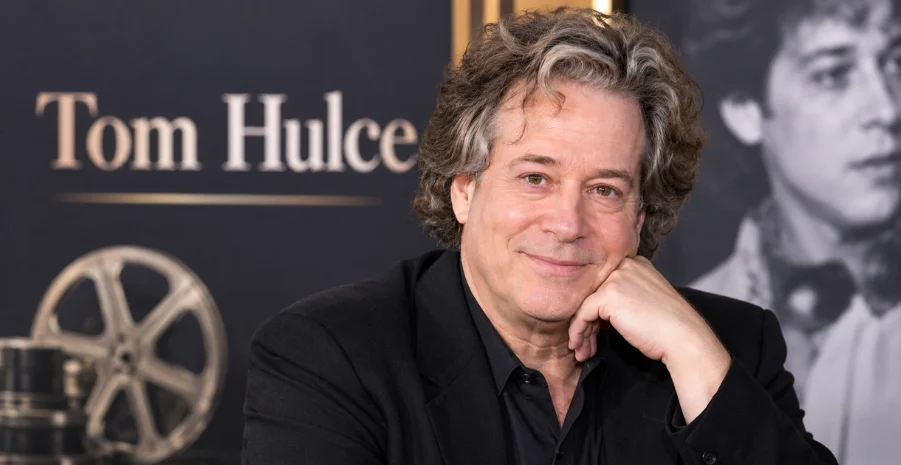
Tom Hulce is best known for his Oscar-nominated Mozart in Amadeus, but his career extends far beyond that performance. The American actor later shifted toward directing and producing, building a substantial second career in theater. In 2026, his latest Broadway producing credit is the revival of Chess, which closed in June.
Tom Hulce, born December 6, 1953, is a 72-year-old American actor and theater producer. He earned an Academy Award nomination for Amadeus and won an Emmy for The Heidi Chronicles. He later moved away from regular acting to focus on directing and producing stage work.
| Quick facts about Tom Hulce | Details |
|---|---|
| Full name | Thomas Edward Hulce |
| Born | December 6, 1953, in Detroit, Michigan |
| Age in September 2026 | 72 |
| Best-known film role | Wolfgang Amadeus Mozart in Amadeus (1984) |
| Other notable roles | Animal House, Parenthood, The Hunchback of Notre Dame |
| Major acting honors | Academy Award nomination and Primetime Emmy win |
| Major producing honor | Tony Award for Best Musical as a producer of Spring Awakening |
| Recent Broadway credit | Lead producer of the 2025 revival of Chess |
Key takeaways
- His Mozart performance remains his defining screen role and earned an Academy Award nomination.
- He deliberately shifted from acting toward directing and producing rather than simply disappearing from entertainment.
- His theater career includes Spring Awakening, American Idiot, Ain’t Too Proud, and Chess.
- He briefly returned to voice Quasimodo for Disney’s Once Upon a Studio in 2023.
Why Tom Hulce still draws interest in 2026
Renewed interest in Amadeus has introduced his work to another generation of viewers. A new television adaptation reached U.S. audiences in 2026, bringing fresh attention to the earlier film. That renewed attention has also revived questions about the actor who played Mozart in 1984.
His career is unusual because its most visible chapter was not the longest. He stepped away from regular screen acting while still widely recognized by movie audiences. He then spent decades shaping theater projects from behind the scenes.
Early life and theater roots
Hulce was born in Detroit and grew up in Plymouth, Michigan. He first hoped to become a singer, but his changing teenage voice redirected him toward acting. He later studied performing arts before moving to New York for professional theater work.
His early stage career included Equus, where he began as an understudy and later played Alan Strang. That experience placed him inside serious New York theater before his movie career took off. Readers exploring long entertainment careers may also enjoy ReadsNWrite’s Robert Conrad career profile.
Amadeus made him internationally known.
Miloš Forman cast Hulce as Wolfgang Amadeus Mozart in the 1984 film Amadeus. F. Murray Abraham played Antonio Salieri, creating the central rivalry that drives the story. The film became a major awards success and won eight Academy Awards.
Both leading actors received Academy Award nominations in the same category. Abraham won Best Actor, while Hulce remained one of the year’s five nominees. The nomination fixed his Mozart performance as the central achievement of his screen career.
Movies, television, and a memorable Disney voice role
His film work also includes Larry “Pinto” Kroger in Animal House and Larry Buckman in Parenthood. He later played supporting roles in dramas, comedies, and television projects. In 1996, he won an Emmy for playing Peter Patrone in The Heidi Chronicles.
That same year, Disney audiences heard him as Quasimodo in The Hunchback of Notre Dame. The role used both his acting and singing voice, giving him another lasting association. For another performer spanning live action and voice work, see ReadsNWrite’s Scott Grimes career guide.
Why he moved away from acting
His reduced screen presence was a career choice, not a sudden disappearance. In later interviews, he explained that playing one part inside a story became less compelling. He grew more interested in shaping the entire production and its creative direction.
That shift led toward directing, developing, and producing theater. He co-directed a large stage adaptation of John Irving’s The Cider House Rules. The move gave him influence over projects without requiring a continuing public acting profile.
Broadway success behind the scenes
His producing career became especially visible with Spring Awakening. The musical won the 2007 Tony Award for Best Musical, with Hulce listed among its producers. The original Broadway production won eight Tony Awards during that awards season.
He later produced American Idiot and Ain’t Too Proud, both Tony-nominated musicals. His most recent Broadway producing credit is the 2025 revival of Chess. That production ran at the Imperial Theatre until June 21, 2026.
What he is doing now
At 72, he remains far more connected to theater than his limited screen appearances might suggest. His recent Chess credit shows that his producing career continued into the 2025–2026 Broadway season. Public records also list decades of producer and director work after his acting peak.
He has not followed a conventional retirement path from entertainment. Instead, he shifted roles within the industry and kept working on select projects. Readers interested in distinctive supporting careers can also browse ReadsNWrite’s Peter Dante profile.
Personal life and common online rumors
Hulce has kept much of his personal life outside regular celebrity coverage. He has not made his private relationships part of his public career. That reticence matters because unsourced claims still appear on biography sites.
No reliable public evidence confirms a spouse or children. Celebrity biography pages often repeat each other rather than cite a source. A careful profile should separate documented career facts from speculation about his private life.
A short career timeline
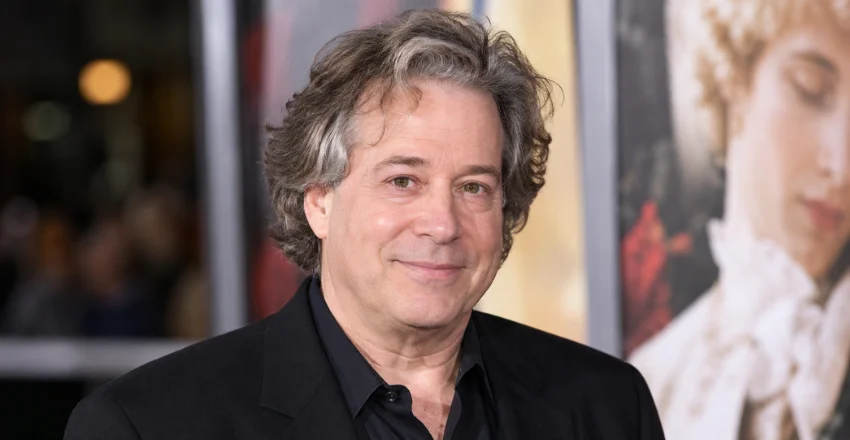
His career is easier to understand when acting and producing credits appear together. The milestones show a steady move from performance toward broader creative control. They also explain why his public visibility changed without ending his entertainment career.
| Year | Milestone | Why it matters |
|---|---|---|
| 1974 | Equus | Early Broadway stage work |
| 1978 | Animal House | Major early film role |
| 1984 | Amadeus | Oscar-nominated performance as Mozart |
| 1990 | A Few Good Men | Tony nomination for acting |
| 1996 | The Heidi Chronicles | Primetime Emmy win |
| 1996 | The Hunchback of Notre Dame | Voice of Quasimodo |
| 2007 | Spring Awakening | Tony-winning producing credit |
| 2010 | American Idiot | Tony-nominated producing credit |
| 2019 | Ain’t Too Proud | Tony-nominated producing credit |
| 2023 | Once Upon a Studio | Brief return as Quasimodo |
| 2025–2026 | Chess | Latest Broadway lead-producing credit |
The timeline also shows that his career never split neatly into “actor” and “producer” periods. Theater remained important while he was acting, and performance experience informed his later production work. That continuity is central to understanding his professional choices.
Where to start with his work
New viewers should begin with Amadeus because it captures the performance that defined his public image. Animal House then shows an earlier, looser comic side of his screen work. Parenthood offers another accessible role from his later film career.
Disney fans can add The Hunchback of Notre Dame for a strong voice performance with substantial singing. Theater fans should then explore the projects he produced, especially Spring Awakening. That sequence makes his shift from performer to producer easier to understand.
Why his career still stands out
His story isn’t just about one famous Mozart performance. It is also about a performer who chose broader creative control and built a second career. The result is a mix of acclaimed acting, voice work, directing, and major Broadway productions.
If you are revisiting his work, start with Amadeus and then follow the theater credits forward. That path shows how his interests changed while his commitment to storytelling remained consistent. It also explains why a lower screen profile did not mean a departure from entertainment.
FAQ
How old is Tom Hulce in 2026?
He was born on December 6, 1953, making him 72 in September 2026. He will turn 73 on December 6, 2026. His birth date is consistently listed by major entertainment and theater databases.
Did he win an Oscar for Amadeus?
No, he did not win the Academy Award for Best Actor. He was nominated for his performance as Mozart at the 1985 ceremony. His co-star F. Murray Abraham won for playing Salieri in the same film.
Why did he stop acting regularly?
He became more interested in shaping stories beyond a single acting role. Interviews describe a deliberate move toward directing and producing rather than an abrupt exit. He still made occasional later screen appearances after reducing his acting schedule.
What was his last acting role?
His last live-action film role was a small appearance in Jumper (2008). He later returned to voice Quasimodo in Disney’s Once Upon a Studio (2023). That brief return did not signal a full return to regular acting.
Is he married, or does he have children?
No reliable source confirms a current spouse or children. He has kept that part of his life out of public coverage. Biography pages that state otherwise are usually unsourced and should be treated cautiously.
What is he doing now?
His recent public work centers on theater producing rather than screen acting. He served as a lead producer of the 2025 Broadway revival of Chess. The production closed in June 2026 after a run at the Imperial Theatre.