Understanding a company’s financial health is crucial for investors, creditors, and managers, and the current ratio is one of the most important tools for assessing it. What is a good current ratio? It measures a company’s ability to meet short-term obligations using its short-term assets, providing a snapshot of liquidity and operational efficiency. By analyzing the current ratio, stakeholders gain a clear view of a company’s short-term financial health. Personal contribution limits move on a similar annual cycle — the 457(b) maximum contribution rose to $24,500 for 2026.
It helps guide important decisions on lending, investing, and operational management. By understanding the current ratio, stakeholders can allocate resources more effectively. This insight ensures that assets are used efficiently and obligations are met on time. Ultimately, it helps minimize financial risk and supports long-term business stability. Ratios only take you so far with a momentum name, which is why our breakdown of whether to buy Nvidia stock now separates the company from the entry price.
| Section | Key Points |
| What Is the Current Ratio? | Calculated as: Current Ratio = Current Assets ÷ Current Liabilities. Shows how many dollars of current assets are available to cover each dollar of current liabilities. High ratio = strong liquidity; low ratio = potential issues. |
| Current Assets | Assets convertible to cash within one year, e.g., cash, accounts receivable, and inventory. |
| Current Liabilities | Obligations due within one year, e.g., accounts payable, short-term debt, and accrued expenses. |
| Why Is It Important? | Helps assess financial health, liquidity, creditworthiness, and operational efficiency. A strong ratio signals stability; a weak ratio may indicate potential problems. |
| Liquidity Assessment | Evaluates whether a company can meet short-term obligations with available assets. A strong ratio shows it can manage liabilities without external support. |
| Financial Health Indicator | A healthy ratio reflects stability; a low ratio may indicate liquidity challenges. Reassures investors and creditors. |
| Creditworthiness | Lenders use it to assess risk before approving loans or credit lines. A strong ratio increases attractiveness to creditors. |
| What Is a Good Current Ratio? | General guidelines: 1.5–2 = ideal; below 1 = potential liquidity issues; above 3 = possible inefficiency. |
| Industry Variation | Retail: 1–1.5 (fast turnover); Manufacturing/Capital- Intensive: 2–3 (ensures liquidity). |
| Limitations | Does not measure cash flow, may overestimate inventory, and is only a snapshot in time. |
| Improving the Current Ratio | Increase current assets, reduce liabilities, manage inventory efficiently, and grow revenue. |
What Is a Good Current Ratio?

The current ratio is a key financial metric that helps assess a company’s ability to pay off its short-term liabilities using its short-term assets. It provides insight into the company’s liquidity and overall financial health. The ratio is calculated as
{Current Ratio} = {Current Assets}
{Current Liabilities}}
A higher current ratio generally indicates that a company has enough assets to cover its debts, while a lower ratio may signal potential liquidity issues. What is a good current ratio? Investors, creditors, and managers commonly use this ratio to make informed decisions about lending, investing, or operational strategies.
- Current Assets: Assets that can be converted into cash within one year, such as cash, accounts receivable, and inventory.
- Current Liabilities: Obligations due within one year, including accounts payable, short-term debt, and accrued expenses.
The resulting number shows how many dollars of current assets are available to cover each dollar of current liabilities.
Why Is the Current Ratio Important?
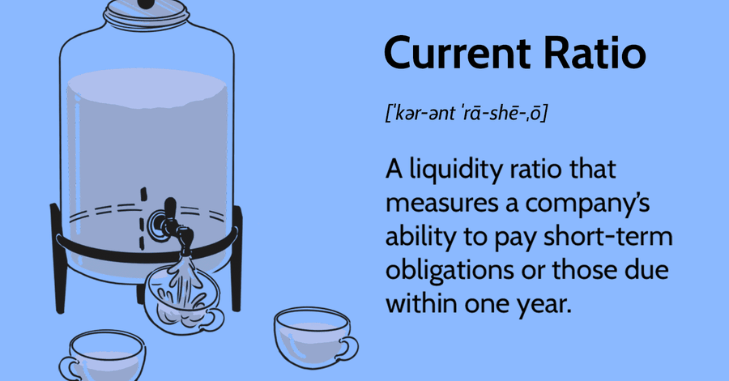
The current ratio is important for several reasons. It helps assess a company’s short-term financial health and ability to meet obligations. Lenders and investors use it to evaluate creditworthiness and operational efficiency. What is a good current ratio? A strong ratio signals stability, while a weak ratio may indicate potential liquidity problems.
Liquidity Assessment
The current ratio measures a company’s ability to meet its short-term obligations with its available assets. It helps investors and creditors quickly evaluate financial stability. A strong ratio indicates the company can comfortably handle upcoming liabilities without external support.
Financial Health Indicator
A healthy current ratio reflects a company’s overall financial stability and strength. It reassures investors and creditors that obligations can be met on time. Conversely, a low ratio may signal potential liquidity challenges that require attention.
Creditworthiness
Lenders rely on the current ratio to assess a company’s risk before approving loans or credit lines. A strong ratio indicates the business is capable of meeting short-term obligations. This makes the company more attractive to creditors and financial partners.
Importance of Good Current Ratio

A “good” current ratio depends on the industry, company size, and business model, but general guidelines are:
- 1.5 to 2: Considered ideal for most industries. This indicates the company has $1.50–$2 of current assets for every $1 of current liabilities, striking a balance between liquidity and efficiency.
- Below 1: Signals that a company may struggle to cover short-term obligations.
- Above 3: Could indicate excessive cash or inventory that is not being efficiently used for growth.
Industry Variation:
- Retail companies may have a lower ideal ratio (around 1–1.5) due to fast inventory turnover.
- Manufacturing or capital-intensive industries may maintain higher ratios (2–3) to ensure adequate liquidity.
Limitations of the Current Ratio
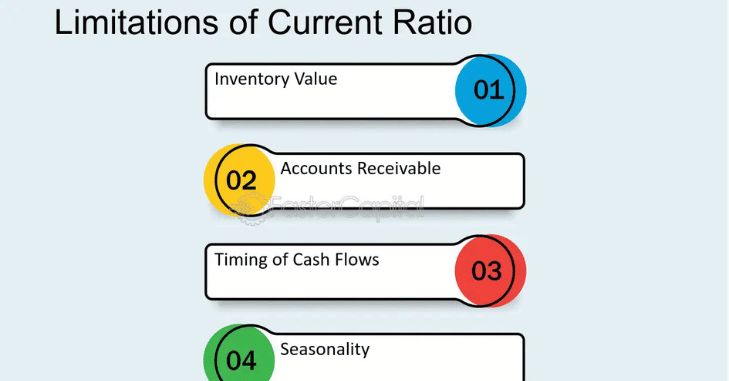
While useful, the current ratio does have some limitations. It does not account for cash flow timing, may overestimate the liquidity of certain assets, such as inventory, and only provides a snapshot of a company’s financial position at a specific moment. Stakeholders should consider it alongside other financial metrics for a complete picture.
- Does Not Measure Cash Flow: It only considers the value of assets, not how quickly they can be converted to cash.
- Inventory Overestimation: Some assets, like inventory, may not be easily liquidated, especially in specialized industries.
- Snapshot in Time: It reflects the financial position at a specific moment and may not account for seasonal fluctuations.
Strategies for Improving the Current Ratio

- Increasing Current Assets: Boost cash reserves, accounts receivable, or liquid investments.
- Reducing Current Liabilities: Pay off short-term debt or renegotiate payment terms with suppliers.
- Efficient Inventory Management: Reduce excess inventory to avoid tying up cash unnecessarily.
- Revenue Growth: Increase sales and collect receivables faster to strengthen liquidity.
Conclusion
The current ratio is a key indicator of a company’s short-term financial stability and operational efficiency. While a ratio between 1.5 and 2 is generally considered healthy, the ideal value depends on the industry and business model. What is a good current ratio? Monitoring this ratio helps investors, creditors, and managers identify potential liquidity issues.
By monitoring the current ratio, companies can optimize asset utilization and improve operational efficiency. It helps management make strategic financial decisions that strengthen liquidity and reduce risk. Ultimately, monitoring the current ratio helps a company maintain financial stability over the long term. It supports sustainable growth by ensuring resources are used wisely. This enables the business to navigate challenges while staying on a path of consistent success.
Want to know about Commercial Building for Rent: Strategic, High-Yield, and Flexible Business Spaces for Growth and Investment Check out our Real Estate category.
FAQs
Industry-specific current ratios differ. What is deemed beneficial in one sector may not be in another. Generally speaking, though, a current ratio of 1.2 to 2 indicates that a business has sufficient assets to pay down its debt.
A company’s short-term assets, even if fully realized at book value, would not be sufficient to satisfy its short-term liabilities if its current ratio is less than 1.0. In other words, a current ratio below 1.0 is typically considered poor.
For most sectors, a current ratio between 1.5 and 3.0 is considered good. This range indicates that a business may easily fulfill its commitments while keeping sufficient operating money.
Generally speaking, a healthy current ratio is between 1.5 and 2, though this can change based on the sector your business works in. If a company needs to pay off its immediate debts and liabilities, the current ratio indicates whether it has sufficient cash flow.
Generally speaking, a corporation has enough current assets to meet its current liabilities if its current ratio is more than 1.00. A corporation has enough working capital to cover all of its current liabilities if its current ratio is 1.50 or above.