Another key reason investors continue to ask, “Why is Intel stock so cheap?” is the market’s focus on future earnings power rather than Intel’s legacy scale and brand strength. While Intel remains a major player in CPUs, its growth narrative has been overshadowed by competitors that are expanding more rapidly in AI accelerators, advanced GPUs, and energy-efficient architectures.
In addition, uncertainty around execution timelines, return on capital, and the ability to win back lost market share has made investors cautious, leading to compressed valuation multiples. As a result, “Why is Intel stock so cheap?” reflects a broader concern that Intel’s turnaround is a long-term project, with rewards that may take years to fully materialize, rather than an immediate growth story.
| Factor | Details |
| Market Share Loss | AMD’s Ryzen/EPYC chips outperform Intel in consumer and server markets. |
| Manufacturing Delays | Intel is behind TSMC/Samsung on 10nm/7nm process nodes. |
| Weak Growth Areas | AI chips, GPUs, cloud, and edge computing underperform rivals. |
| Management & Strategy | Frequent leadership changes, late market entry, and high capex. |
| Financial Metrics | Slower revenue growth, margin pressure, and low P/E. |
| Industry & Macro | Semiconductor cyclicality, global supply chain issues, and geopolitics. |
| Upside Catalysts | IDM 2.0, AI/data center investments, government incentives, value appeal. |
Why Is Intel Stock So Cheap?

When investors ask, “Why is Intel stock so cheap?”, the answer lies in a combination of strategic missteps, intense competition, and prolonged execution challenges. Intel has struggled with manufacturing delays, falling behind rivals like AMD and TSMC in advanced chip process nodes, which weakened its technological leadership and market confidence.
At the same time, faster-growing competitors have captured market share in high-demand areas such as data centers, AI, and high-performance computing, while Intel’s revenue growth has remained comparatively modest. Heavy capital spending on new fabrication plants under its IDM 2.0 strategy has further pressured margins and short-term profitability, making earnings appear less attractive despite a low valuation.
Leadership changes, geopolitical uncertainties, and skepticism about how quickly Intel can regain its competitive edge have all weighed on investor sentiment. As a result, when evaluating the question “Why is Intel stock so cheap?”, it becomes clear that the low price reflects not just valuation opportunity, but also real concerns about execution, competition, and the time required for Intel’s long-term turnaround to materialize.
Historical Dominance and Current Market Reality
Intel led the CPU market for decades, powering PCs, servers, and enterprise computing. Yet today:
- AMD and other competitors have eroded Intel’s dominance.
- Intel’s inability to consistently innovate in mobile, GPUs, and AI has allowed rivals to capture market share.
- Legacy dominance masks the fact that Intel faces structural challenges in sustaining revenue growth.
Erosion of CPU Market Share

Intel faces significant competitive pressure across multiple segments, which has contributed to its stock trading at relatively low levels. In the consumer market, AMD’s Ryzen processors offer superior performance-per-dollar, appealing to PC enthusiasts and luring customers away from Intel’s offerings.
Manufacturing Challenges and Technology Gaps
| Challenge | Description | Impact on Intel Stock |
| Process Node Delays | Intel struggled with the transition from 14nm → 10nm → 7nm | Falling behind TSMC and Samsung in performance and efficiency |
| Outsourcing vs. In-House | Competitors like AMD use TSMC’s advanced fabs | Faster innovation cycles and product rollout, Intel lags |
| Investor Skepticism | Delays and missed targets create doubt | Confidence in Intel’s leadership recovery is low, keeping valuations depressed |
Weak Presence in High-Growth Markets

- Artificial Intelligence Chips: Nvidia and AMD dominate AI acceleration; Intel’s Habana and Xe lines are behind.
- GPU Market Lag: Intel has yet to gain meaningful traction in high-performance GPUs.
- Cloud and Edge Computing: Slower adoption in cloud and AI infrastructure limits revenue growth relative to peers.
Management Decisions and Strategic Missteps
Intel has also been impacted by leadership instability, with frequent executive changes creating uncertainty about strategic direction and long-term vision. The company has missed critical market opportunities, entering sectors like mobile processors, GPUs, and AI chips later than competitors, which allowed rivals to secure first-mover advantages and capture significant market share.
Additionally, capital-intensive investments, including spending on new fabrication facilities and the implementation of the IDM 2.0 strategy, have placed further pressure on margins and short-term profitability, adding to investor concerns despite the company’s long-term growth plans.
Financial Performance and Investor Sentiment
Intel faces several challenges that contribute to its relatively low stock price. Revenue growth has slowed, with the company posting modest increases that are overshadowed by faster expansion from competitors like AMD and NVIDIA. At the same time, margin pressure remains a concern, as high research and development (R&D) expenses and manufacturing costs continue to weigh on net profitability.
These operational challenges contribute to the valuation gap: while Intel’s low price-to-earnings (P/E) ratios make the stock appear “cheap,” this discount largely reflects real competitive risks and the company’s ongoing struggles to maintain technological leadership and market share in a rapidly evolving semiconductor landscape.
Macroeconomic and Industry Headwinds
- Semiconductor Cycles: The market fluctuates with PC, server, and tech spending.
- Supply Chain and Geopolitics: Trade tensions and supply disruptions create uncertainty.
- Investor Rotation: Capital is flowing toward high-growth AI, GPU, and semiconductor companies rather than legacy CPU players.
Potential Upside Catalysts

Intel’s future growth potential is anchored in several strategic initiatives. The IDM 2.0 strategy aims to expand manufacturing capabilities and modernize fabs, which could help Intel regain competitiveness against TSMC, Samsung, and other advanced semiconductor manufacturers.
Alongside this, the company is making significant investments in AI and data center processors, targeting high-growth markets where demand for advanced chips is rapidly increasing. Additionally, government support through programs like the US CHIPS Act provides financial incentives for domestic semiconductor manufacturing, offering Intel a favorable environment to scale production and innovate.
Finally, the stock’s valuation opportunity, reflected in its low price-to-earnings ratios, could attract value-focused investors if Intel successfully executes these strategies and demonstrates measurable improvements in market share, profitability, and technological leadership.
Long-Term Strategic Initiatives
- Integrated Device Manufacturing (IDM): Reducing reliance on external foundries while modernizing production technology.
- AI and Accelerators: Expanding portfolio with Habana AI processors and Xe GPUs.
- Data Center Dominance: Reinforcing server and enterprise market presence.
- Sustainability and Innovation: Investing in eco-friendly production processes and next-gen semiconductor technology.
Risks and Challenges Investors Should Know

| Risk Factor | Explanation |
| Competition | AMD, Nvidia, and ARM-based CPUs challenge market share. |
| Execution Risk | Manufacturing delays and strategic missteps may persist. |
| Technological Lag | Intel must catch up in GPUs, AI chips, and advanced nodes. |
| Macroeconomic Cycles | PC and server demand volatility affects revenue. |
| Geopolitical Uncertainty | Trade tensions with China and global supply chain risks. |
Conclusion
In conclusion, the persistent question “Why is Intel stock so cheap?” can be traced to a combination of competitive pressure, execution challenges, and investor skepticism about the pace of Intel’s turnaround. While Intel still holds significant scale, brand recognition, and strategic importance in the global semiconductor industry, its struggles with manufacturing delays, market share erosion, and slower growth in high-demand segments like AI and data centers have weighed heavily on valuation.
Ultimately, “Why is Intel stock so cheap?” reflects a market that is discounting near-term uncertainty while waiting for clear proof that Intel can successfully execute its long-term strategy and reclaim its position as a technology leader.
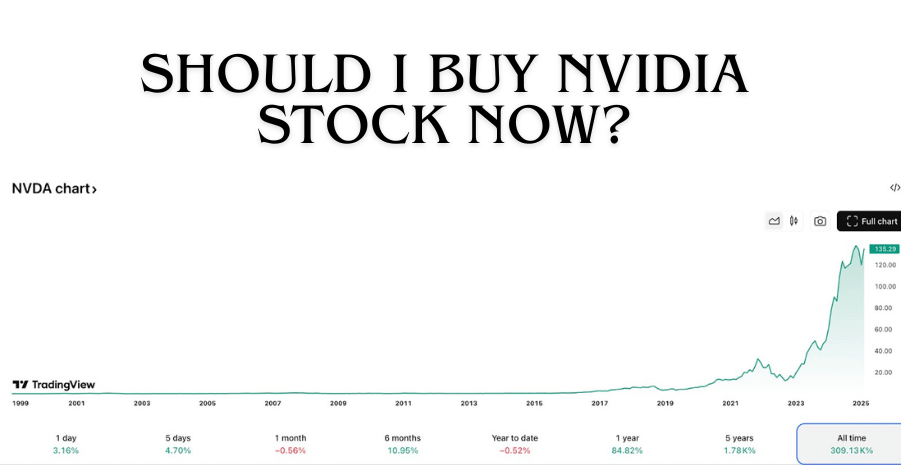
Want to know about Should I Buy Nvidia Stock Now? A Comprehensive Analysis of NVDA’s Growth Potential, Risks, and Investment Strategies Check out our Finance category.
FAQs
MarketBeat reports that 20 analysts have given Intel’s stock a hold recommendation, 6 have given it a sell rating, and 5 have given it a buy rating.
Following a downgrade by Bank of America analysts who expressed concerns that the company has become overpriced following a recent surge, Intel shares dipped on Tuesday.
Analysts now predict that between 2024 and 2027, Intel’s sales will increase at a compound annual growth rate (CAGR) of 4%. Additionally, they anticipate that it would earn a profit in 2026 and increase its EPS by 187% in 2027 following two years of net losses.
For customers who conduct intensive threaded applications like video editing, 3D rendering, and coding, AMD processors, especially those in the Ryzen series, generally offer more cores and threads than their Intel counterparts.
Many PCs that require the integration of top-tier CPUs and GPUs will be powered by these new x86 RTX SOCs. At a price of $23.28 per share, NVIDIA will invest $5 billion in Intel’s common shares.