


Whale watching rewards timing more than it rewards travel budget, and the calendar is unforgiving.
The best places to watch whales are Húsavík in Iceland, Hermanus in South Africa, Kaikōura in New Zealand, Maui, Monterey Bay, the lagoons of Baja California Sur, the Azores, Tofino, Mirissa in Sri Lanka, and the Antarctic Peninsula — but the destination matters far less than hitting a window that is often only four to eight weeks wide. Every one of those places is world-class on the right date and close to empty on the wrong one.
Here is the part almost no list tells you: the gap between destinations is measurable. Published sighting-success rates at the top spots run from roughly 69 percent to 97 percent. That spread is not about scenery or boat quality. It tracks a single variable — whether a place has whales living in it or whales passing through it.

The month-by-month table: where to go, when, and what you’ll actually see
Peak windows below come from national marine sanctuaries, tourism boards, government operators, and peer-reviewed survey data. Where an operator or a published study reports an actual sighting rate, it is listed. Where nobody publishes one, the column says so instead of guessing.
| Destination | Peak window | Headline species | Best platform | Published data |
|---|---|---|---|---|
| Húsavík, Iceland | May–Sep (season Mar–Nov) | Humpback, minke; blue whale Apr–Jun | Boat (oak schooner or RIB) | 97% sighting success since 1995 |
| Kaikōura, New Zealand | Year-round; Oct–Apr adds orca | Sperm whale (resident males) | Boat or helicopter | Over 90% success; 80% fare refund if none seen |
| Hermanus, South Africa | Aug–Oct (season Jun–Dec) | Southern right whale | Shore — cliff path | Record 252 whales counted in a single day |
| Maui, Hawaiʻi | Jan–Mar (season Nov–Apr) | Humpback | Shore and boat | 847 whales logged off Maui on Feb 28, 2026 |
| Monterey Bay, California | Apr–Oct blue/humpback; Dec–Feb and Mar–May gray | Blue, humpback, gray, orca | Boat | 6,094 sq mi sanctuary; no operator rate published |
| Tofino / Ucluelet, BC | Mar–May northbound | Gray whale | Boat, plus headland viewpoints | 13,000–14,500 grays migrate past annually |
| Baja California Sur lagoons | Mid-Jan to mid-Mar | Gray whale mothers and calves | Panga (small open skiff) | Calf pairs fell 217 (2024) to 85 (2025) |
| Azores, Portugal | Apr–Jun blue/fin/sei; Jul–Sep sperm | Blue and sperm whale | Boat | 25–28 cetacean species recorded in these waters |
| Mirissa, Sri Lanka | Dec–Apr (official south-coast season Nov–Apr) | Blue whale | Boat | 68.7% trip success across 266 trips (peer-reviewed) |
| Antarctic Peninsula | Feb–Mar | Humpback, minke, orca | Expedition ship and Zodiac | ~120,000 ship-borne visitors in a recent season |

Resident whales forgive bad timing. Migration corridors don’t.
This is the distinction that decides whether your trip works. Kaikōura sits above a submarine canyon that comes almost to the beach, and male sperm whales live there permanently — the International Whaling Commission’s case study on Kaikōura describes them as the year-round basis of an industry that by 2006 drew roughly a million visitors a year and generated about NZ$28 million annually. You can show up in June or in January and the whales are still there.
The Azores work the same way. The IWC handbook notes that more than 25 cetacean species have been reported in Azorean waters, with sperm whales viewable all year — genuinely rare worldwide — and blue, fin, and sei whales moving through on migration from April to June. Miss the April window and you still have sperm whales, dolphins, and pilot whales.
Now compare that to Tofino. Gray whales pass Vancouver Island northbound from March through May and southbound in November and December. Arrive in July and the corridor is largely empty of migrating grays. Baja’s calving lagoons are tighter still: mid-January to mid-March, because NOAA Fisheries reports that gray whale calves are born from early January to mid-February in the shallow lagoons of Mexico, and the mothers leave with them. A two-week miscalculation there is not a partial loss. It is the whole trip.
The same seasonal discipline applies to any wildlife-driven trip south of the equator, where the calendar is flipped and the shoulder months behave nothing like they do at home — the logic that governs picking the right months for a Brazil trip is the same logic that governs Hermanus and Kaikōura.

Hermanus is the one place where the boat is optional
Most “shore-based whale watching” claims mean squinting at a distant blow through binoculars. Hermanus is the genuine exception. Southern right whales enter Walker Bay to calve and rest, and the Cape Whale Coast tourism site notes they can be viewed sometimes only meters from shore, with a record of 252 whales logged in a single day. The town employs the world’s only Whale Crier, who walks the cliff tops announcing where the animals are during the six-month season. That season runs June to December, peaks August through October, and the Hermanus Whale Festival is scheduled for October 2 to 4, 2026.
Maui is the runner-up, and the evidence is unusually good: the count that produced 847 whales off Maui on February 28, 2026 was made by 487 volunteers standing at 46 land-based sites, with a peak hour of 256 whales between 9:30 and 9:45 a.m. Those are people on shore, not on boats. NOAA’s Hawaiian Islands Humpback Whale National Marine Sanctuary states that roughly half of the North Pacific humpback population visits Hawaiian waters, present November through April with a January-to-March peak.
Everywhere else on the list, plan to get on a boat. Monterey, Húsavík, Mirissa, the Azores, and Antarctica are boat-based destinations with occasional lucky shore sightings, not shore destinations.
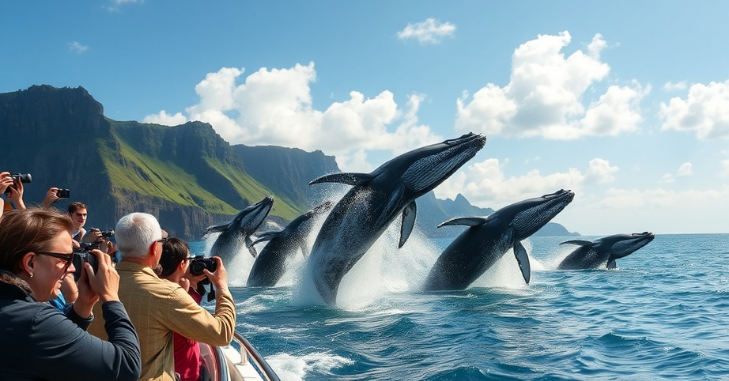
What a “guaranteed sighting” actually buys you
Read the fine print before it changes your booking decision. Across the industry, a sighting guarantee almost always means a free repeat trip, not your money back — and the free trip usually runs on standby.
| Operator / region | Stated success rate | What you get if you see nothing |
|---|---|---|
| Prince of Whales (Vancouver / Victoria) | Over 95% | Complimentary repeat tour; base fare only, fees and taxes still apply; never expires; non-transferable; standby |
| Cape May Whale Watcher (New Jersey) | Not published | Free pass for a future trip, never expires; explicitly no refund; seals and dolphins count as a sighting |
| Futurismo (Azores) | Not published | Another tour free of charge |
| Whale Watch Kaikōura (New Zealand) | Over 90% | 80% of your fare refunded in cash — the rare real refund |
| North Sailing (Húsavík) | 97% since 1995 | No guarantee published; company states it cannot control wild animals |
| Monterey Bay Whale Watch | Not published | No guarantee policy published |
Two practical consequences. First, a guarantee is only worth something if you have a spare day in the destination — a free standby ticket is useless if you fly out that night. Second, watch the definition. Cape May’s published marine mammal guarantee is satisfied by whales, dolphins, porpoises, or seals. In New Zealand, the legal definition of “a whale” for guarantee purposes includes baleen whales, sperm whales, beaked whales, killer whales, and pilot whales.

The gray whale numbers most articles are a decade out of date on
Three of the destinations above — Baja’s lagoons, Tofino, and Monterey’s winter and spring season — depend on the same animals: eastern North Pacific gray whales. That population is in trouble, and the scale of it changes how you should plan.
NOAA Fisheries reported in 2025 an estimated 13,000 gray whales, with a range of 11,700 to 14,500 — the lowest count since the 1970s, down from roughly 27,000 about a decade earlier. An unusual mortality event ran from 2019 to 2023, and reproduction has not recovered since. Calf production tells the sharper story: about 85 calves were counted migrating past central California in 2025, the lowest since records began in 1994. Independent survey work off Piedras Blancas counted 217 mother-calf pairs in 2024 and only 85 in 2025.
None of this means skip Baja. The lagoon experience — a small panga, curious whales approaching the boat — is still one of the most extraordinary wildlife encounters available anywhere. It means calibrate. Expect fewer animals than the photos from 2014 suggest, book the tightest part of the window rather than the edges, and understand that a bad calf year makes the shoulder weeks noticeably thinner.
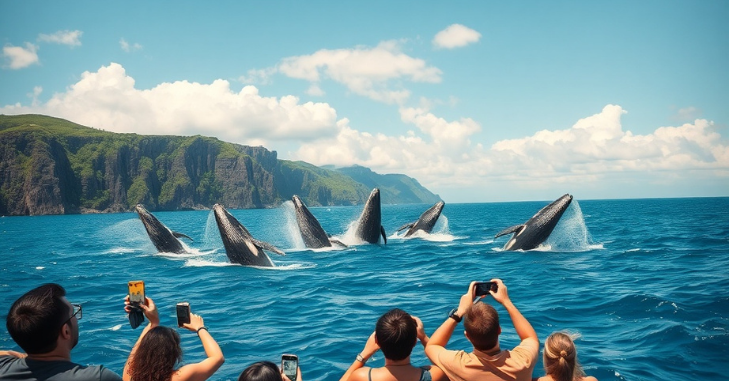
Winter is peak season for the biggest names
If you can only travel between December and March, you are in luck, because that stretch covers Hawaiʻi’s January-to-March humpback peak, Baja’s mid-January-to-mid-March calving window, Sri Lanka’s south-coast season, and the southbound gray whale run past Monterey. The Monterey Bay National Marine Sanctuary seasonal calendar puts southbound grays in December and February and northbound cow-calf pairs from March through May, with humpbacks arriving in March and staying into November.
That makes whale watching one of the few wildlife spectacles that peaks in the northern winter, which is worth remembering if your usual list of things to do in the winter has gone stale. Summer travelers get a different but equally strong set: Iceland from May to September, the Azores for sperm whales July through September, and Monterey’s blue and humpback whales from spring into fall.

Seasickness, small boats, and long days on the water
The honest tradeoff nobody puts in a listicle: the trips with the best odds are frequently the roughest. Monterey Bay Whale Watch prices a standard daily trip from $76.32, a three-hour sunset trip from $79.50, and an all-day whale trip or killer whale search from $196.10. That all-day option is where the rare species show up, and it is also eight-plus hours in open Pacific swell.
Baja lagoon pangas are small and low, which is exactly why the whales come so close, and also why the ride out can be wet and bouncy. Antarctica requires crossing the Drake Passage in most itineraries. Iceland’s Húsavík boats work a bay that is usually calmer than the open North Atlantic, which is part of why its record is so strong.
Take motion sickness medication before boarding, not after symptoms start. Stand mid-ship where pitch is lowest, keep your eyes on the horizon, and stay on deck rather than in the cabin. Bracing against swell for hours is genuinely fatiguing, and a long day of it will find any weakness in your back — a few minutes of simple lower back stretches the night before and after a full-day charter is not a trivial suggestion.
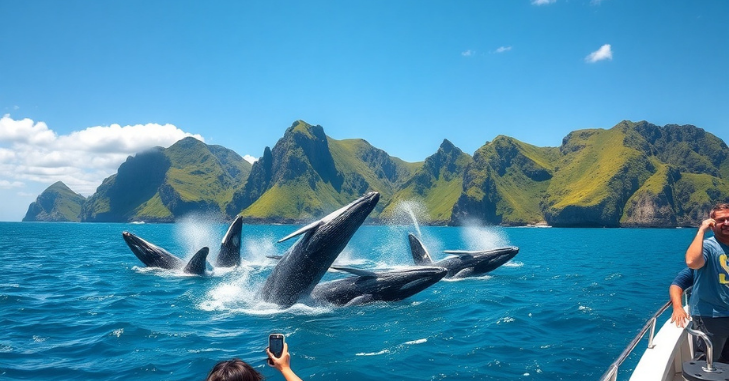
The rules that decide how close you actually get
Approach limits vary by country and species, and they explain why the same animal looks enormous in one destination and distant in another. NOAA’s marine life viewing distances set 100 yards as the general minimum for whales, including humpbacks in Hawaiʻi and Alaska, with a 1,000-foot minimum altitude for aircraft. North Atlantic right whales require 500 yards and 1,500 feet. Killer whales in Puget Sound require 200 yards, plus staying out of their forward path within 400 yards. NOAA also recommends capping observation of any individual or group at 30 minutes.
Canada uses metric equivalents — Parks Canada guidance at Pacific Rim National Park Reserve is 100 meters from most marine mammals and 200 meters from killer whales. The Azores go further, enforcing a mandatory code of conduct, a capped number of licensed vessels, and an outright ban on swimming with whales.
The practical takeaway: bring binoculars everywhere. Even in Hermanus, where whales come within meters of the cliff path, 8×42 binoculars turn a distant blow into an identifiable animal. And in regulated waters, the operators who stay farthest back are usually the ones running the best-managed, most sustainable trips.

How to choose, in order
- Start with your dates, not the destination. Fix the two weeks you can travel, then find which place is inside its peak window on those dates. Reversing this order is how people end up in Tofino in August.
- Decide whether you need a guarantee. If you have one shot and no spare day, prioritize a resident-whale destination like Kaikōura or the Azores over a migration corridor.
- Match the species to the experience you want. Blue whales mean size and distance. Humpbacks mean surface behavior and breaching. Southern rights mean proximity. Sperm whales mean a long wait and a spectacular fluke.
- Book the middle of the window, not the edges. Early-season and late-season trips are cheaper for a reason.
- Build in a second attempt. Two mornings in the same port beats one morning in a “better” destination, and it converts most guarantee policies from a formality into something useful.

The destinations on this list have earned their reputations. What they have not earned is the assumption that any of them works on any date. Iceland’s 97 percent and Sri Lanka’s 69 percent are both real, and the difference between them is not luck — it is the number of whales that live in the water you are floating on, on the day you show up. Pick the date first, verify the species and the platform, read the guarantee, and the rest is weather.
Planning Questions, Answered
What is the single best place to watch whales?
For reliability, Husavik in Iceland is hard to beat: North Sailing reports a 97 percent sighting success rate based on data collected since 1995, with a season running March to November and a May-to-September peak. For sheer proximity, Hermanus in South Africa wins, because southern right whales come within meters of the cliff path and no boat is required. Which one is ‘best’ depends entirely on whether you can travel in the Northern Hemisphere summer or the Southern Hemisphere winter.
What month is best for whale watching?
There is no universal best month, which is why the destination has to follow the date. January through March covers the Hawaiian humpback peak, the Baja gray whale calving window from mid-January to mid-March, and Sri Lanka’s south-coast season. May through September covers Iceland, and February through March is the window for the Antarctic Peninsula. April to June is the narrow slot for blue, fin, and sei whales in the Azores.
Does a ‘guaranteed whale sighting’ mean you get your money back?
Almost never. Prince of Whales in British Columbia offers a complimentary repeat tour with the base fare waived, though fees and taxes still apply and seats are standby. Cape May Whale Watcher issues a free pass that never expires but explicitly offers no refund, and counts seals or dolphins as a sighting. Whale Watch Kaikoura is the notable exception, refunding 80 percent of your fare in cash if no whale is seen.
Where can you watch whales from shore without a boat?
Hermanus, South Africa is the world-class option, with a record of 252 whales counted in a single day and a dedicated Whale Crier who announces sightings along the cliff tops during the June-to-December season. Maui is a strong second: the February 28, 2026 count logged 847 whales off Maui using 487 volunteers at 46 land-based sites. Most other famous destinations, including Monterey, Husavik, Mirissa and the Azores, are effectively boat-only.
Are gray whales still worth traveling for in 2026?
Yes, but with recalibrated expectations. NOAA Fisheries estimated roughly 13,000 eastern North Pacific gray whales in 2025, a range of 11,700 to 14,500 and the lowest since the 1970s, down from about 27,000 a decade earlier. Calf production hit a record low, with around 85 calves counted past central California in 2025. The Baja lagoon experience remains extraordinary, but book the center of the mid-January to mid-March window rather than the edges.
How close are whale watching boats legally allowed to get?
In U.S. waters, NOAA sets 100 yards as the general minimum for whales, including humpbacks in Hawaii and Alaska, rising to 500 yards for North Atlantic right whales and 200 yards for killer whales in Puget Sound, where vessels must also stay out of the forward path within 400 yards. NOAA recommends limiting observation of any group to 30 minutes. Parks Canada uses 100 meters for most marine mammals and 200 meters for killer whales, and the Azores ban swimming with whales outright.
Where the Migration Dates Come From
- International Whaling Commission’s case study on Kaikōura — wwhandbook.iwc.int
- NOAA Fisheries reports that gray whale calves are born from early January to mid-February — fisheries.noaa.gov
- Cape Whale Coast tourism site — whalehermanus.com
- Hawaiian Islands Humpback Whale National Marine Sanctuary — hawaiihumpbackwhale.noaa.gov
- published marine mammal guarantee — capemaywhalewatcher.com
- NOAA Fisheries reported in 2025 — fisheries.noaa.gov
- Monterey Bay National Marine Sanctuary seasonal calendar — montereybay.noaa.gov
- NOAA’s marine life viewing distances — fisheries.noaa.gov

